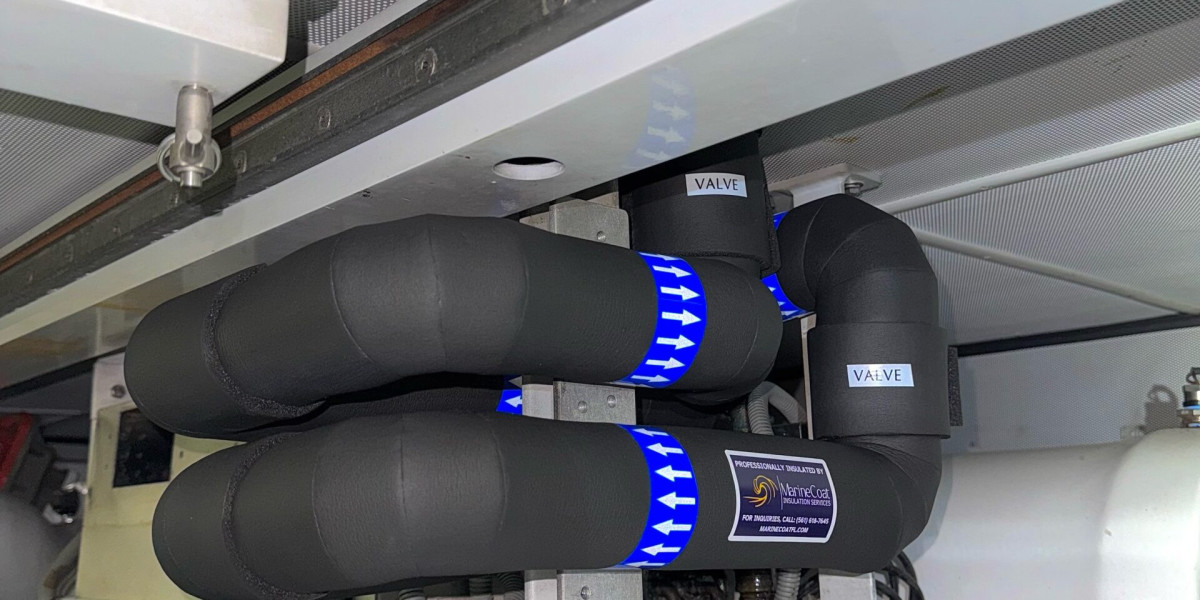

Environmental Stressors Affecting Marine Piping Networks
Oceanic conditions impose multifaceted challenges on vessels, offshore platforms, and coastal installations. Saline aerosols infiltrate microscopic surface imperfections, triggering oxidation beneath protective layers. Thermal cycling—caused by day-to-night shifts or engine load variations—induces expansion and contraction within piping frameworks. Without appropriate insulation, this movement weakens joints, supports, and welded seams.
Marine pipe insulation serves as a defensive envelope, stabilizing temperature gradients while limiting direct contact between metallic surfaces and corrosive elements. In polar waters, insulation also safeguards against freezing, which could fracture lines transporting water, fuel, or chemical agents. In tropical regions, it prevents overheating and condensation that may degrade adjacent components.
Material Technologies Engineered for Maritime Resilience
Durability in marine climates depends heavily on material composition. Insulation systems must resist moisture ingress, microbial growth, and hydrocarbon exposure. Closed-cell elastomeric foam is frequently selected for its vapor barrier characteristics and flexibility. Mineral wool, treated with hydrophobic compounds, delivers fire resistance and thermal robustness for high-temperature conduits.
Elastomeric Foam Systems
Elastomeric formulations exhibit low thermal conductivity and exceptional resistance to vapor diffusion. Their cellular architecture restricts water penetration, reducing the probability of corrosion under insulation. This makes them particularly suitable for chilled water pipelines, HVAC circuits, and refrigeration systems aboard vessels.
Mineral-Based Insulation
Mineral wool and calcium silicate variants are often deployed in engine rooms and exhaust lines where temperatures escalate significantly. These materials tolerate extreme heat while maintaining structural integrity. Protective jacketing—such as aluminum cladding or composite sheathing—adds an additional defensive layer against mechanical impact and saline exposure.
Marine insulation companies frequently customize composite systems that combine multiple substrates, optimizing performance for specific maritime applications.
Corrosion Under Insulation: A Persistent Maritime Threat
Corrosion under insulation (CUI) remains one of the most insidious risks in offshore engineering. Moisture trapped within insulation layers can initiate electrochemical reactions that progress unnoticed until structural failure occurs. This hazard is amplified in marine climates due to constant humidity and salt content.
Mitigation Strategies
Effective marine pipe insulation systems incorporate vapor barriers, drainage provisions, and corrosion-resistant coatings. Stainless steel banding and sealed longitudinal joints prevent water intrusion. Regular inspection protocols—using infrared thermography or ultrasonic testing—identify hidden degradation before it escalates.
By integrating advanced sealants and hydrophobic membranes, marine insulation companies significantly reduce CUI incidence, extending the operational lifespan of maritime piping networks.
Thermal Efficiency and Energy Optimization
Beyond corrosion protection, insulation systems enhance energy conservation. Heat loss in steam or hot water lines increases fuel consumption, directly affecting vessel efficiency. Conversely, inadequate insulation on chilled systems results in condensation, leading to water damage and potential safety hazards.
Performance Calculations
Engineers evaluate thermal conductivity coefficients, surface emissivity, and environmental exposure to determine optimal thickness. Computational modeling assists in predicting long-term behavior under fluctuating sea conditions. The result is a tailored marine pipe insulation configuration that balances energy retention with weight constraints—an essential consideration for ship stability.
Fire Safety and Regulatory Compliance
Maritime regulations demand stringent fire protection measures. Insulation materials must comply with International Maritime Organization standards and classification society requirements. Fire-rated insulation systems delay flame propagation and protect structural steel during emergencies.
Mineral-based insulation, when paired with fire-resistant mastics and barriers, provides compartmentalization that prevents rapid heat transmission. Compliance documentation from marine insulation companies ensures that installations meet SOLAS and other safety frameworks.
Acoustic and Vibration Control
Mechanical systems aboard vessels generate substantial noise and vibration. Insulation assemblies contribute to acoustic attenuation, reducing decibel levels in crew quarters and control rooms. Dense mineral fibers absorb airborne sound, while flexible foam dampens mechanical oscillation.
This dual functionality—thermal and acoustic—improves onboard habitability and safeguards sensitive instrumentation from vibration-induced wear.
Installation Methodologies for Marine Applications
Precision installation determines long-term system performance. Surfaces must be thoroughly cleaned and primed before insulation placement. Any residual salt deposits can compromise adhesion and accelerate corrosion. Seam sealing, staggered joints, and properly tensioned bands ensure a watertight envelope.
Quality Assurance Protocols
Marine insulation companies implement rigorous inspection checklists, including thickness verification, adhesion testing, and environmental exposure assessments. Digital documentation tracks each segment of piping to maintain traceability and maintenance history.
Prefabricated insulation segments are increasingly utilized to streamline onboard installation, reducing labor time and enhancing dimensional accuracy.
Sustainability and Lifecycle Considerations
Environmental stewardship has become a priority in maritime engineering. Modern insulation materials are designed for extended service life, minimizing replacement frequency and material waste. Some elastomeric products incorporate low-emission manufacturing processes, contributing to improved air quality within confined shipboard environments.
Lifecycle cost analysis reveals that high-performance marine pipe insulation yields substantial long-term savings by decreasing fuel usage, preventing corrosion-related repairs, and reducing downtime.
Offshore Platforms and Specialized Requirements
Offshore oil and gas installations face amplified exposure to wave impact, wind-driven spray, and structural vibration. Insulation systems in these settings require reinforced jacketing and enhanced fastening mechanisms. Composite cladding with marine-grade alloys provides superior resistance against impact and abrasion.
In subsea applications, insulation must withstand hydrostatic pressure and extreme temperature gradients. Advanced syntactic foam solutions deliver buoyancy control alongside thermal insulation, illustrating the expanding innovation within the marine insulation sector.
Future Innovations in Marine Insulation Engineering
Technological progress continues to redefine insulation performance. Aerogel-infused blankets offer ultra-low thermal conductivity with minimal thickness, reducing weight while enhancing protection. Smart insulation systems embedded with moisture sensors provide real-time monitoring, alerting operators to potential water ingress.
Digital modeling tools enable predictive maintenance planning, ensuring that insulation systems remain resilient throughout their operational lifecycle. As research evolves, marine insulation companies are poised to integrate nanotechnology and advanced composites into next-generation maritime solutions.
Conclusion
Durability in marine climates demands insulation systems engineered for corrosion resistance, thermal efficiency, fire safety, and mechanical resilience. Through material innovation, meticulous installation, and continuous monitoring, marine pipe insulation safeguards vital piping networks against the ocean’s relentless forces. Strategic collaboration with experienced marine insulation companies ensures optimal performance, regulatory compliance, and long-term operational sustainability for vessels and offshore facilities worldwide, reinforcing the indispensable value of advanced marine pipe insulation in maritime engineering.