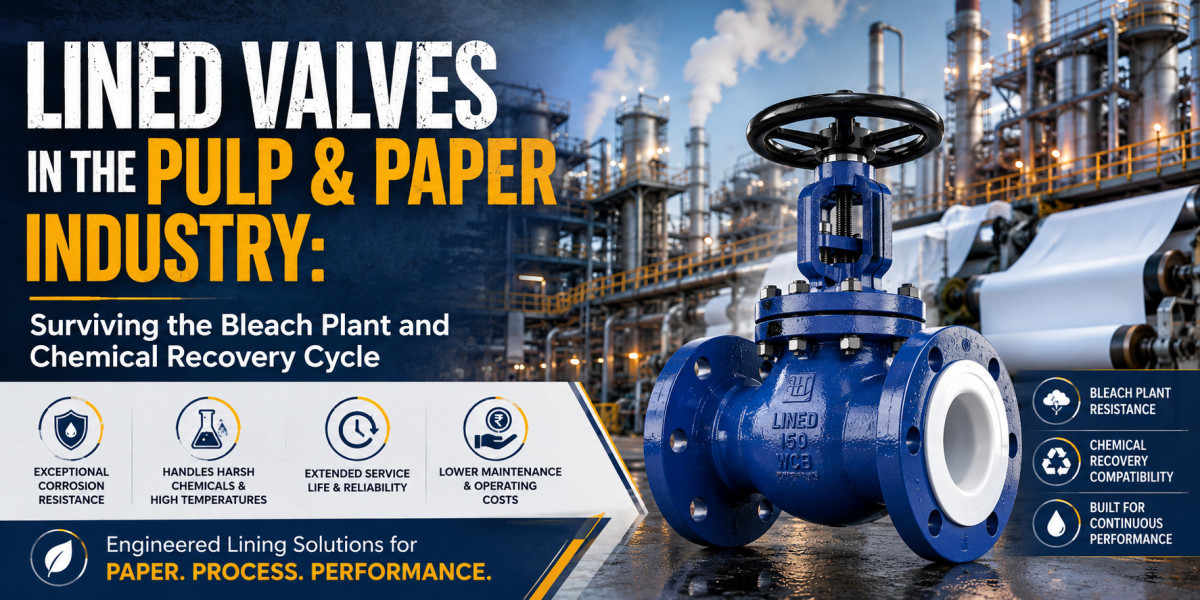

Paper manufacturing looks like a mechanical process from the outside, but the chemistry behind it is intense. Pulping, bleaching, and chemical recovery stages in a typical kraft paper mill involve chlorine dioxide, sodium hydroxide, sulfuric acid, and black liquor — a caustic, high-solids byproduct of the pulping process. Valves throughout these sections are exposed to some of the most corrosive and high-temperature conditions found in any process industry, which is why lined valves are widely specified across bleach plants, digesters, and chemical recovery circuits in pulp and paper mills.
Why the Pulp & Paper Process Is So Demanding on Valves
The kraft pulping process uses a strongly alkaline cooking liquor to break down wood chips into pulp, generating black liquor as a byproduct that must be processed through an evaporation and recovery cycle. The subsequent bleaching stages use chlorine dioxide, hydrogen peroxide, or oxygen-based bleaching agents to whiten the pulp, each of which is highly reactive and, in the case of chlorine dioxide, also corrosive to standard metals at the temperatures typically used in bleach towers. Add to this the abrasive nature of pulp stock itself, which carries fibrous and sometimes gritty material, and it becomes clear why valves in this sector face a combination of chemical attack, heat, and abrasion simultaneously.
How Lined Valves Perform in Pulp & Paper Service
Lined valves address these combined challenges through a fluoropolymer or rubber lining that isolates the metal valve body from the process stream:
- PTFE and PFA linings provide strong resistance to chlorine dioxide, caustic soda, and the acidic conditions found in bleach plant washing stages
- Rubber linings are often used in pulp stock and abrasive slurry lines where fiber content and consistency create wear on unlined valve internals
- High-temperature tolerance, since bleach plant operations frequently run at elevated temperatures that would accelerate corrosion in unprotected valves
- Reduced unplanned shutdowns, which matters significantly in continuous paper mill operations where a single valve failure in the bleach plant can halt an entire production line
Common Lined Valve Types Used in Paper Mills
- Lined Butterfly Valves – used extensively on large-diameter bleach plant and chemical recovery lines due to their compact design and ease of operation
- Lined Plug Valves – preferred in pulp stock and slurry lines because their straight-through bore resists fiber buildup and clogging
- Lined Ball Valves – applied for isolation duty on chlorine dioxide and caustic transfer lines
- Lined Diaphragm Valves – used in chemical dosing systems for bleaching agents and pH control chemicals
Key Applications Across the Pulp & Paper Process
- Chlorine dioxide and hydrogen peroxide bleaching stages
- Black liquor evaporation and chemical recovery circuits
- Kraft pulping digester feed and discharge lines
- Caustic soda handling in the recovery boiler and causticizing area
- Effluent treatment systems handling mixed acidic and alkaline mill wastewater
Because paper mills typically operate continuously with scheduled maintenance shutdowns spaced months apart, valve reliability in the bleach plant and recovery area directly affects overall mill output and production planning.
Selecting the Right Lined Valve for Your Mill
Bleach plant and chemical recovery applications generally call for PTFE or PFA linings due to their strong resistance to chlorine-based chemicals and caustic solutions, particularly at elevated operating temperatures. Pulp stock and fiber-laden slurry lines, on the other hand, often perform better with rubber linings that can handle the abrasive, fibrous nature of the material without excessive wear. Consulting with a manufacturer familiar with kraft and mechanical pulping processes helps ensure the right lining and valve type are matched to each specific stage of the mill.
Conclusion
From the digester to the bleach plant to chemical recovery, pulp and paper mills put valves through a demanding combination of heat, corrosive chemicals, and abrasive pulp stock. Lined valves give paper mill engineers a proven way to protect these critical process lines and avoid the costly downtime that comes with valve failure in a continuous production environment. If your mill is planning an upgrade to its bleach plant, recovery circuit, or pulping lines, you can buy Lined Valves at Freture Techno Pvt. Ltd., a Mumbai-based manufacturer supplying PTFE, PFA, and rubber lined butterfly, plug, ball, and diaphragm valves engineered for the harsh operating conditions found in the pulp and paper industry.